Top
Kathmandu–Nijgadh Fast Track: A Multidimensional National Project Racing Against Time
Kathmandu–Nijgadh Fast Track: A Multidimensional National Project Racing Against Time Amid a national climate dominated by political instability, protests, party disputes, and bureaucratic delays, the Kathmandu–Nijgadh Fast Track project has emerged as a rare symbol of hope. With only 17 months remaining before the revised deadline of Chaitra 2083, the project is once again under scrutiny as the Nepal Army reiterates its commitment to completing the long-awaited national pride project on time.
Dipesh Ghimire
4 min read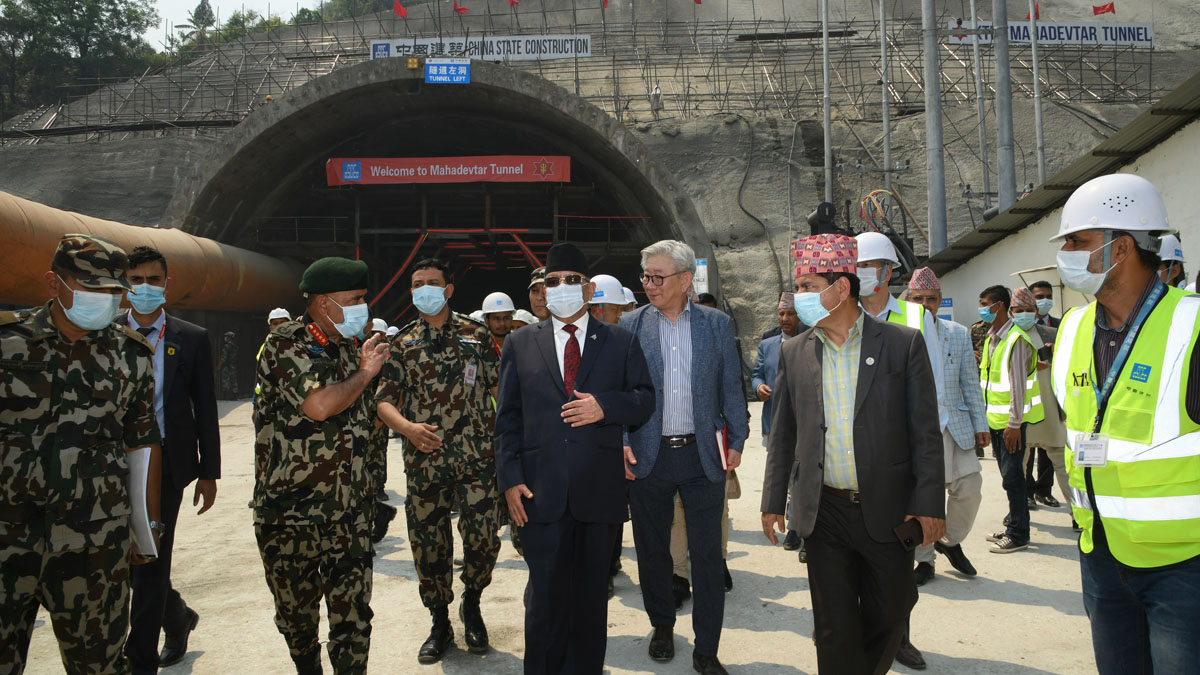
Amid a national climate dominated by political instability, protests, party disputes, and bureaucratic delays, the Kathmandu–Nijgadh Fast Track project has emerged as a rare symbol of hope. With only 17 months remaining before the revised deadline of Chaitra 2083, the project is once again under scrutiny as the Nepal Army reiterates its commitment to completing the long-awaited national pride project on time.
A Project of National Dream and Strategic Importance
The Kathmandu–Nijgadh Fast Track is widely regarded as a transformative economic corridor for Nepal. Launched with a foundation stone laid by then-Prime Minister Pushpa Kamal Dahal ‘Prachanda’ on Jestha 14, 2074, the project aims to reduce travel time between Kathmandu and the Terai to nearly one hour and 15 minutes. However, delayed approvals, including the DPR, which was endorsed only on Bhadra 1, 2076, significantly slowed early progress and escalated project costs.
Despite these setbacks, physical works have accelerated in recent years, and the Nepal Army—responsible for construction—has expressed confidence in meeting the current deadline.
According to Project Director Dharmendra Kumar Jha, as of Ashoj 2082, the project has achieved:
43.5% physical progress
44.7% financial progress
The Army has divided the project into 12 packages, out of which 11 packages are under rapid construction. Only one section—the Khokana starting point—continues to face unresolved land acquisition conflicts and local objections.
Tunnels and Bridges Nearing Completion
The 71-km expressway crosses four districts—Kathmandu, Lalitpur, Makwanpur, and Bara—and includes:
13 tunnels (with work ongoing in 7)
Breakthrough completed in major tunnels like
Dhedre Tunnel
Len Danda Tunnel
90 bridges, including several high and specialized structures
Total bridge length: nearly 10 km
Furthermore:
Land compensation of 5,172 ropani has already been distributed.
49,634 trees have been cut as required, while more than 700,000 saplings have been planted for environmental compensation.
While most sections show encouraging progress, the Khokana area—originally designated as the official starting point—remains mired in:
Disputes over alignment and starting point
Land acquisition issues
Road access and settlement relocation concerns
Local protests resisting project entry
The project cannot be fully completed until this final obstacle is cleared. The Nepal Army has repeatedly appealed for decisive action from the government to resolve this critical bottleneck.
Analysts argue that the remaining 17 months are sufficient if:
All agencies work in coordination
Bureaucratic delays are minimized
Procurement and approvals are fast-tracked
Local issues are resolved immediately
They highlight that countries like China and India build entire smart cities within a year, raising the question: Why should a single expressway take decades in Nepal?
The Fast Track is seen as more than a road—it is a foundation for Nepal’s future economic transformation. Once operational, its impact will be felt across:
1. Agriculture and Market Expansion
The expressway will connect Kathmandu directly with fertile Terai districts like:
Bara
Parsa
Rautahat
Sarlahi
Dhanusha
Siraha
This will:
Reduce Kathmandu’s dependence on expensive Indian imports
Encourage local agricultural production
Cut annual agricultural import costs (currently Rs 400 billion)
Make vegetables and food products fresher and cheaper for valley residents
2. Reduction in Travel and Transport Costs
Studies by the Asian Development Bank and World Bank show:
Over Rs 10 billion per year in fuel savings
Faster, smoother cargo movement
Decongestion of existing routes like the Mugling–Naubise corridor
Lower transportation cost → lower product prices → lower inflation
3. Social and Demographic Balance
The Fast Track is expected to:
Reduce Kathmandu’s overcrowding
Promote decentralization
Create new business hubs in the Terai
Reduce pressure on valley housing, food supply, and infrastructure
4. Integration With Nijgadh International Airport
The expressway is the backbone of the proposed Nijgadh International Airport, making the two projects deeply interconnected. Together, they would:
Expand international aviation capacity
Boost tourism and trade
Strengthen Nepal's position in regional connectivity
According to the revised DPR:
Total estimated cost: Rs 211.93 billion
High cost attributed to
Difficult terrain
Numerous bridges and tunnels
Environmental reinforcements
Resettlement and compensation challenges
Despite the cost, experts argue the project is extremely cost-beneficial, affecting nearly half of Nepal’s population either directly or indirectly.
Development experts universally agree that modern infrastructure is the first requirement of prosperity. Nepal has long suffered due to:
Poor-quality roads
High transport costs
Overburdened cities
Uneven economic distribution
Lack of reliable connectivity
The Fast Track promises to address these systemic issues by:
Ensuring rapid mobility
Stimulating regional economies
Promoting national integration
Encouraging investments
Making Nepal’s logistics sector competitive
The Kathmandu–Nijgadh Fast Track is more than a road. It is a lifeline project with the potential to reshape:
Nepal’s economy
Social structure
Urban planning
Agricultural markets
National logistics
Future development patterns
After decades of delay and political indecision, the project is finally moving in earnest. If completed on schedule, it could become one of Nepal’s most transformative infrastructures since the construction of the East–West Highway.
The coming 17 months will determine whether Nepal can deliver on this historic opportunity—or whether the Fast Track will remain another example of the country’s chronic inability to complete big projects on time.
Advertisement
Written by
Dipesh Ghimire