Top
Low Credit Demand Persists Despite Falling Interest Rates, Says Central Bank Governor
Low Credit Demand Persists Despite Falling Interest Rates, Says Central Bank Governor Kathmandu — Governor of Nepal Rastra Bank, Bishwo Nath Paudel, has said that a decline in interest rates has not translated into the expected expansion of credit in the economy, highlighting deeper structural weaknesses beyond monetary policy. His remarks come at a time when policymakers are attempting to revive economic activity amid subdued demand and cautious private sector behavior. According to the governor, the central bank had anticipated that lower borrowing costs would encourage businesses and individuals to take loans and invest. However, credit growth has remained below expectations, suggesting that the issue lies not only in the cost of borrowing but also in weak confidence and limited investment appetite. This indicates a broader slowdown where monetary easing alone is insufficient to stimulate economic momentum.
Dipesh Ghimire
2 min read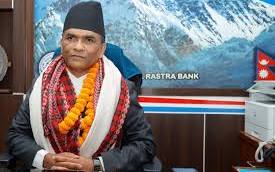
Kathmandu — Governor of Nepal Rastra Bank, Bishwo Nath Paudel, has said that a decline in interest rates has not translated into the expected expansion of credit in the economy, highlighting deeper structural weaknesses beyond monetary policy. His remarks come at a time when policymakers are attempting to revive economic activity amid subdued demand and cautious private sector behavior.
According to the governor, the central bank had anticipated that lower borrowing costs would encourage businesses and individuals to take loans and invest. However, credit growth has remained below expectations, suggesting that the issue lies not only in the cost of borrowing but also in weak confidence and limited investment appetite. This indicates a broader slowdown where monetary easing alone is insufficient to stimulate economic momentum.
Paudel emphasized that the government must play a more proactive role in such circumstances. With private consumption and investment subdued, he argued that increased public spending — particularly capital expenditure — is essential to inject liquidity into the system and create economic activity. In his view, infrastructure development and government-led projects can act as catalysts, encouraging private sector participation and restoring confidence.
He further noted that in countries like Nepal, institutional capacity remains a major constraint. Weak planning, delays in project execution, and inefficiencies in budget utilization have historically limited the effectiveness of public spending. Even when funds are allocated, the inability to spend them efficiently reduces their impact on the overall economy, creating a disconnect between policy intent and real outcomes.
The governor also pointed out that consumer sentiment has weakened significantly. When households are reluctant to spend and businesses hesitate to expand, the economy enters a cycle of low demand. In such a scenario, government expenditure becomes even more critical to break the cycle and stimulate both production and consumption.
Addressing expectations around alternative financing mechanisms, Paudel said that such instruments alone cannot drive economic recovery if underlying confidence remains weak. He indicated that recent socio-economic disruptions, including movements like the “Gen Z protests,” have further complicated the economic environment by affecting sentiment and stability. These developments, he suggested, have added another layer of uncertainty, discouraging investment decisions.
The overall assessment reflects a shift in policy focus — from relying primarily on monetary tools to recognizing the need for coordinated fiscal intervention. While interest rate cuts are traditionally seen as a key stimulus measure, Nepal’s current situation underscores the limits of such an approach in the absence of strong fiscal execution and institutional efficiency.
Analysts interpret the governor’s remarks as a संकेत that economic recovery will depend on a balanced policy mix. Without effective government spending and improved implementation capacity, lower interest rates alone may continue to have limited impact. The challenge, therefore, lies in aligning monetary easing with fiscal discipline and execution to revive growth in a sustainable manner.
As Nepal navigates this phase of economic uncertainty, the central bank’s message is clear: restoring confidence, accelerating public spending, and strengthening institutional capacity are essential steps to reactivate the economy and ensure that financial conditions translate into real economic activity.
Advertisement
Written by
Dipesh Ghimire