Top
Rising Power Demand and Supply Gaps Raise Risk of Industrial Load Cuts in Nepal
Rising Power Demand and Supply Gaps Raise Risk of Industrial Load Cuts in Nepal Kathmandu — Nepal is once again facing mounting pressure on its power system as rising summer demand, combined with structural weaknesses in energy production and distribution, threatens potential electricity cuts in industrial sectors in the coming weeks. Despite being declared load-shedding free in 2016, the country now finds itself confronting familiar vulnerabilities, exposing gaps in long-term energy planning. The surge in electricity demand has been driven by seasonal and behavioral factors. With temperatures rising, consumption has increased significantly, particularly in urban areas. In the Kathmandu Valley alone, demand has climbed from around 500 megawatts during winter to nearly 600 megawatts at present. Compounding this trend is a shortage of cooking gas, which has pushed more households toward electric alternatives, further increasing load on the grid.
Dipesh Ghimire
3 min read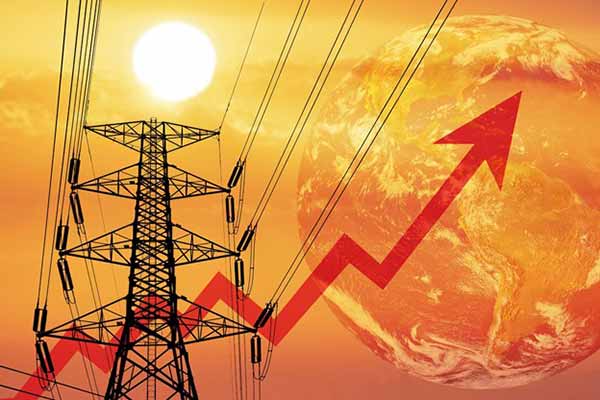
Kathmandu — Nepal is once again facing mounting pressure on its power system as rising summer demand, combined with structural weaknesses in energy production and distribution, threatens potential electricity cuts in industrial sectors in the coming weeks. Despite being declared load-shedding free in 2016, the country now finds itself confronting familiar vulnerabilities, exposing gaps in long-term energy planning.
The surge in electricity demand has been driven by seasonal and behavioral factors. With temperatures rising, consumption has increased significantly, particularly in urban areas. In the Kathmandu Valley alone, demand has climbed from around 500 megawatts during winter to nearly 600 megawatts at present. Compounding this trend is a shortage of cooking gas, which has pushed more households toward electric alternatives, further increasing load on the grid.
At the same time, Nepal continues to rely heavily on electricity imports to meet its needs. The Nepal Electricity Authority currently imports approximately 400 to 450 megawatts of power daily from India. However, this arrangement remains a short-term solution rather than a sustainable strategy. The renewal of permission to import electricity through the Indian Energy Exchange is underway, with the existing approval set to expire soon. Authorities are attempting to extend this window at least until Baisakh, but uncertainty remains over long-term continuity.
Even with imports, technical limitations within Nepal’s transmission infrastructure pose significant challenges. Key corridors such as Birgunj–Simara are already operating near capacity, restricting the ability to distribute additional imported electricity to industrial hubs. This bottleneck means that even if supply is secured externally, delivering it efficiently to consumers — particularly large-scale industries — remains difficult.
Energy experts argue that the current situation reflects deeper systemic issues rather than a temporary imbalance. Despite having vast hydropower potential running into thousands of megawatts, Nepal has struggled to scale up production. Delays in project execution, lack of investment, and policy inconsistencies have slowed progress. Equally concerning is the inadequate expansion of transmission networks, which has failed to keep pace with both generation capacity and rising demand.
The quality of electricity supply also remains uneven. Regions such as Nepalgunj continue to face voltage fluctuations, underscoring the need not just for increased generation but for improved distribution management. Without addressing these technical inefficiencies, simply adding more power to the system may not translate into reliable supply.
The looming possibility of electricity rationing for industries has raised alarms about broader economic implications. Industrial output, employment, and revenue generation are closely tied to energy availability. Any disruption in power supply could directly impact production, weaken business confidence, and slow down economic recovery. In this context, energy is not merely a utility but a foundational pillar of economic growth.
Policy analysts have also questioned the lack of diversification in Nepal’s energy strategy. While hydropower remains the dominant focus, alternative sources such as solar and wind energy have not been sufficiently developed. Expanding rooftop solar programs, integrating decentralized generation into the national grid, and promoting energy storage solutions are seen as critical steps toward reducing dependency on imports.
Furthermore, the absence of reservoir-based hydropower projects has limited Nepal’s ability to regulate supply across seasons. Unlike run-of-river projects, reservoir systems can store water and generate electricity during peak demand periods. Expanding such infrastructure — similar to the Kulekhani project — could help stabilize supply and reduce seasonal imbalances.
At a broader level, the situation highlights a persistent gap between policy rhetoric and implementation. Successive commitments to increase power generation have not translated into proportional progress on the ground. Experts argue that unless structural barriers — including regulatory delays, financing challenges, and coordination failures — are addressed, Nepal risks repeating cycles of energy shortage.
As demand continues to rise and supply constraints tighten, the coming months will be critical. The choices made now — whether in accelerating infrastructure development, diversifying energy sources, or strengthening institutional capacity — will determine whether Nepal moves toward energy security or faces a renewed era of power shortages.
Advertisement
Written by
Dipesh Ghimire