NEPSE
Arrest of Former Prime Minister K.P. Sharma Oli Signals Escalation of Accountability Debate in Nepal
Arrest of Former Prime Minister K.P. Sharma Oli Signals Escalation of Accountability Debate in Nepal Kathmandu — The arrest of former Prime Minister K P Sharma Oli in connection with the controversial Gen-Z protest crackdown has marked a decisive turning point in Nepal’s evolving political and legal landscape. Taken into custody from his residence in Gundu, Bhaktapur on Saturday morning, Oli’s arrest comes after the issuance of an urgent warrant, reflecting a shift from political discourse to formal judicial action.
Dipesh Ghimire
2 min read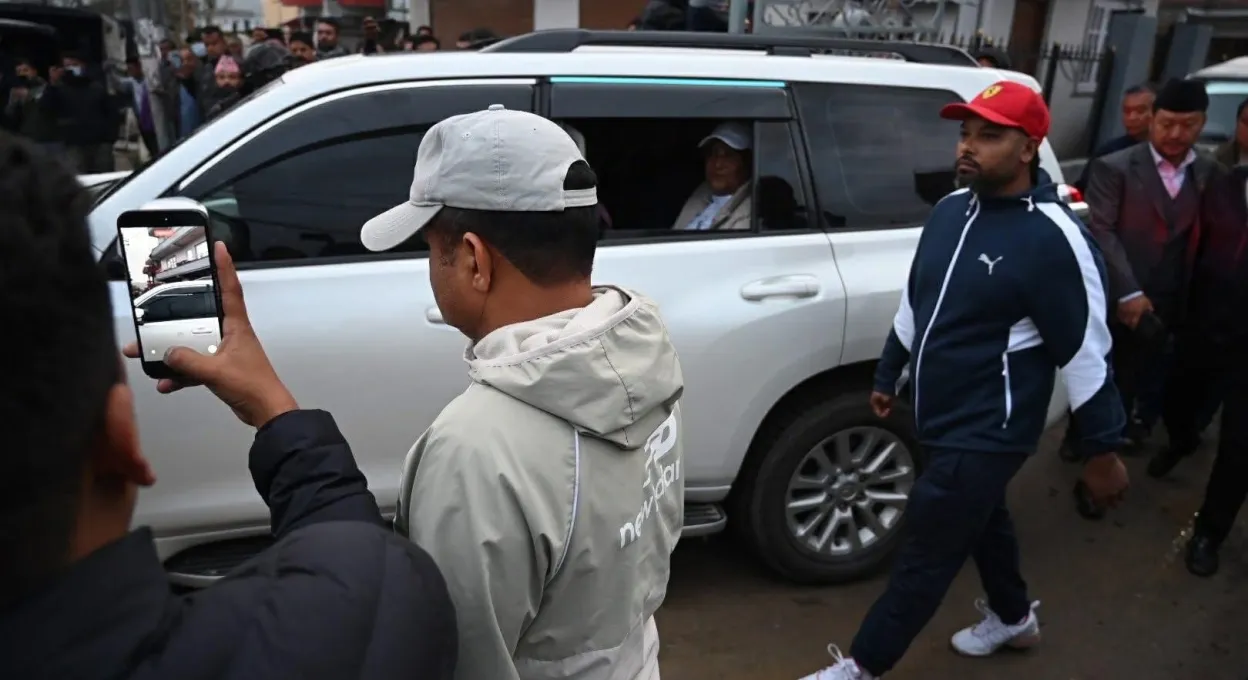
Kathmandu — The arrest of former Prime Minister K P Sharma Oli in connection with the controversial Gen-Z protest crackdown has marked a decisive turning point in Nepal’s evolving political and legal landscape. Taken into custody from his residence in Gundu, Bhaktapur on Saturday morning, Oli’s arrest comes after the issuance of an urgent warrant, reflecting a shift from political discourse to formal judicial action.
The development follows a swift decision by the newly formed government to implement the findings of a high-level investigation commission led by Gauri Bahadur Karki. The Cabinet’s move to act immediately on the commission’s report suggests an intent to project institutional accountability, especially in cases involving high-ranking officials. Analysts view this as a rare instance where recommendations against top political figures are being operationalized without prolonged delay.
The commission’s report, submitted on Chaitra 24, places significant responsibility on the then state leadership, including former Home Minister Ramesh Lekhak. It calls for criminal investigation under serious charges, indicating that the decisions taken during the protest period were not merely administrative lapses but could constitute legal violations. This framing elevates the issue from a political controversy to a matter of criminal liability.
At the heart of the case lies the violent suppression of protests held on Bhadra 23 and 24 in Kathmandu’s Baneshwor area. What began as a youth-led demonstration escalated into a deadly confrontation, with security forces opening fire amid rising tensions. The reported death toll of 76 individuals underscores the gravity of the incident and has become a focal point in debates over the proportional use of force and state responsibility.
The government’s decision to proceed with arrests based on the commission’s findings indicates a broader attempt to redefine the boundaries of political accountability in Nepal. However, it also raises questions about timing, intent, and the potential for such actions to be perceived as politically motivated. Critics argue that without full public disclosure of the report, the process risks being viewed through a partisan lens rather than a purely judicial one.
Oli’s arrest is therefore not just a legal development but a politically charged moment that could reshape alignments and narratives. It places the judiciary and investigative institutions under intense scrutiny, as their handling of the case will determine whether this becomes a precedent for rule-based governance or another episode of contested political justice.
As the case formally enters the judicial process, Nepal stands at a critical juncture. The coming days are likely to test the resilience of its democratic institutions, the credibility of its legal system, and the capacity of its political actors to navigate accountability without deepening polarization.
Advertisement
Written by
Dipesh Ghimire