Nepal’s inflation 2 min readInflation Remains Subdued in Nepal as Price Pressures Ease Across Key SectorsInflation Remains Subdued in Nepal as Price Pressures Ease Across Key Sectors Kathmandu — Nepal’s inflation outlook appears increasingly stable, with recent data up to Falgun of fiscal year 2082/83 indicating a continued moderation in price pressures. According to the latest figures, the year-on-year consumer price inflation stood at 3.62 percent, slightly lower than 3.75 percent recorded in the same month last year. This signals a gradual easing of inflationary pressures, reflecting improved supply conditions and relatively balanced demand in the domestic economy.Dipesh Ghimire·5 Apr, 2026
Nepal’s Economy 2 min readNepal’s Economy Shows Stability with Underlying Structural Signals: Inflation Contained, Remittance-Driven Strength ContinuesNepal’s Economy Shows Stability with Underlying Structural Signals: Inflation Contained, Remittance-Driven Strength Continues Kathmandu — Nepal’s current economic and financial condition, based on data up to the first eight months of the fiscal year 2082/83 (mid-March 2026), reflects a mixed yet relatively stable macroeconomic environment. While key indicators such as inflation and foreign exchange reserves remain favorable, structural dependencies—particularly on remittances—continue to define the country’s economic trajectory.Dipesh Ghimire·5 Apr, 2026
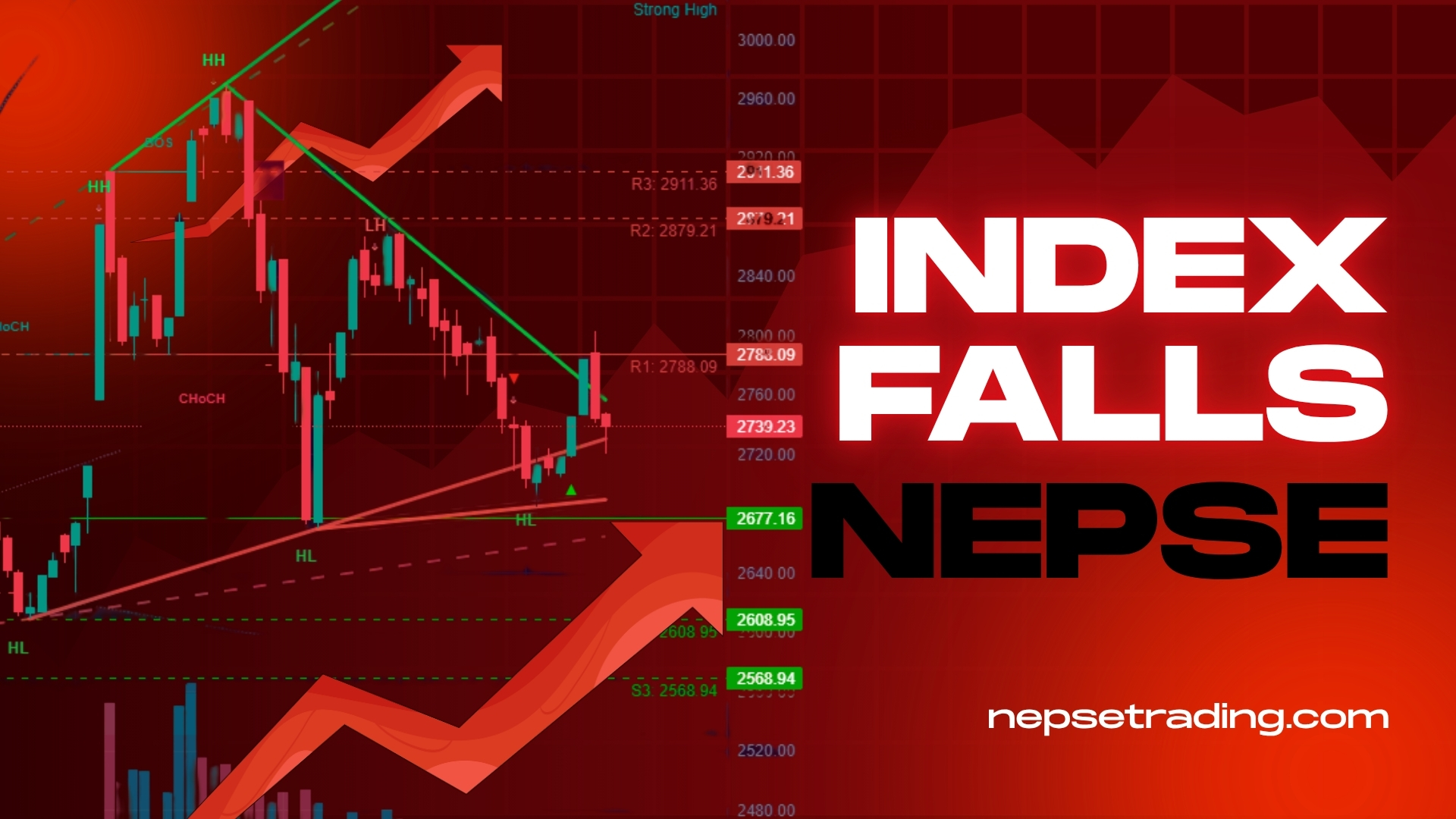
Top3 min readBig Players Under Scrutiny, NEPSE at a Critical Juncture: Will the Market Stabilize or Slip Further?Big Players Under Scrutiny, NEPSE at a Critical Juncture: Will the Market Stabilize or Slip Further? Kathmandu — Nepal’s stock market enters the new trading week under a cloud of uncertainty, as regulatory crackdowns on major market players collide with weakening technical signals and declining liquidity. While the NEPSE index managed a modest recovery on the final trading day of last week, the broader structure of the market continues to reflect fragility rather than strength.Dipesh Ghimire·5 Apr, 2026
editorial3 min readDeepak Bhatt Arrest: A Structural Shock to Nepal’s Economy — Reform, Risk, and the Shadow SystemDeepak Bhatt Arrest: A Structural Shock to Nepal’s Economy — Reform, Risk, and the Shadow System editorial editorial editorial Kathmandu — The arrest of prominent businessman Deepak Bhatt has done far more than create headlines; it has exposed the fragile and deeply interconnected nature of Nepal’s economic structure. What initially appeared to be a law enforcement action against a single individual has quickly evolved into a broader conversation about the foundations of the country’s financial system, the influence of powerful business networks, and the risks embedded within a semi-formal economy.Dipesh Ghimire·3 Apr, 2026
NEPSE4 min readMarket Rallies on Political Shift, Then Slides as Anti-Corruption Drive Sparks UncertaintyMarket Rallies on Political Shift, Then Slides as Anti-Corruption Drive Sparks Uncertainty Kathmandu — Nepal’s stock market has entered a volatile phase, swinging sharply between optimism and fear, as political developments surrounding the rise of Balendra Shah and the overwhelming victory of the Rastriya Swatantra Party (RSP) reshape investor sentiment. The benchmark index initially surged on expectations of reform, only to retreat in the days following the formation of a new government.Dipesh Ghimire·2 Apr, 2026
Top2 min readWar-Driven Oil Surge Shakes Global Markets, Raises Inflation ConcernsWar-Driven Oil Surge Shakes Global Markets, Raises Inflation Concerns Kathmandu — Global financial markets, which had entered 2026 on a relatively stable footing, are now facing renewed turbulence following the outbreak of conflict involving Iran. What initially appeared to be a steady economic trajectory has been disrupted by geopolitical tensions, with energy prices emerging as the most immediate and visible casualty. The sudden escalation has not only unsettled investors but also introduced fresh uncertainty into an already fragile global economic environment.Dipesh Ghimire·2 Apr, 2026
Top4 min readNew Parliament Session Begins Amid High Public Expectations for Reform and AccountabilityNew Parliament Session Begins Amid High Public Expectations for Reform and Accountability Kathmandu — The newly convened session of Nepal’s federal parliament has begun at a time when public expectations are unusually high, not merely for routine legislative proceedings but for meaningful transformation in governance. While parliament is constitutionally mandated to legislate, its broader role as a representative body of public aspirations places a greater responsibility on both lawmakers and the government it forms. This session, therefore, is being closely watched as a test of whether the political system can translate electoral mandates into tangible outcomes for citizens.Dipesh Ghimire·2 Apr, 2026
Top2 min readNRB Eases Capital Pressure on Remittance Firms, Signals Shift Toward Stability Over SpeedNRB Eases Capital Pressure on Remittance Firms, Signals Shift Toward Stability Over Speed Kathmandu. Nepal Rastra Bank has extended the deadline for remittance companies to meet the minimum paid-up capital requirement, a move that reflects a notable shift in regulatory strategy—from aggressive capital enforcement to a more stability-focused approach. Through the second amendment to the “Remittance Regulation, 2079,” the central bank has granted firms an additional two years, allowing them until mid-July 2030 (Ashad 2087) to reach the NPR 100 million threshold.Dipesh Ghimire·2 Apr, 2026
Top2 min readNEPSE’s Decline Reflects a Deeper Shift: From Price Correction to Crisis of ConfidenceNEPSE’s Decline Reflects a Deeper Shift: From Price Correction to Crisis of Confidence Kathmandu. The recent downturn in Nepal’s stock market is no longer just a story of falling numbers—it is increasingly becoming a reflection of shifting investor psychology. While the NEPSE index has been under pressure for several sessions, the underlying driver appears to be more complex than routine market correction. The ongoing wave of investigations, policy tightening, and governance actions has introduced a new layer of uncertainty, reshaping how investors perceive the market.Dipesh Ghimire·1 Apr, 2026
Top3 min readNEPSE in Free Fall: Breakdown Below Key Support Signals Deeper Market StressNEPSE in Free Fall: Breakdown Below Key Support Signals Deeper Market Stress Kathmandu. Nepal’s stock market extended its sharp decline on Wednesday, with the NEPSE index plunging 74.73 points to close at 2,776.36, marking one of the most significant single-day drops in recent sessions. The fall came despite a brief rebound attempt earlier, indicating that selling pressure has firmly taken control of the market. The broader sentiment remains fragile, with investors increasingly driven by fear rather than fundamentals.Dipesh Ghimire·1 Apr, 2026